Is a Day Trip to Bath From London Worth It?
Bath sits just over an hour from London by direct train, and its whole centre is walkable, which makes it one of the easiest big days out from the capital.
 Written with James Thornton, London to Bath day tour guide & heritage specialist
Short answer
Yes, for most people a day trip to Bath from London is well worth it. The direct train from Paddington takes about 1 hour 20 minutes, and the highlights, the Roman Baths, Bath Abbey, the Royal Crescent and Pulteney Bridge, sit within a compact, walkable centre you can cover in a single day. It is less worth the effort if you only have a couple of hours on the ground, or if you specifically want to bathe in the thermal water, which happens at Thermae Bath Spa rather than the Roman Baths.
Most people ask this because Bath looks a little far on the map and they are not sure a single day does it justice. Fair question. The honest answer is that Bath is one of the few places near London where a day trip genuinely delivers the full experience, not a rushed sampler. The city is small, the best sights cluster together, and the train gets you there faster than a lot of London commutes.
Here is the case for and against, so you can decide before you book anything.
How close is Bath, really?
Bath sits about 115 miles west of London, and the fastest direct trains from Paddington reach Bath Spa in 1 hour 19 minutes, with around 72 services running on an average weekday. Bath Spa station stands a five-minute walk from the Roman Baths, so almost none of your day is lost to transit.
Great Western Railway runs the direct route, with departures roughly every half hour and most services taking between 1h15 and 1h35. That frequency is a big part of why the day trip works: miss one train and you are twenty-odd minutes behind, not stranded.
You step off the platform and you are essentially already in the historic centre. No long transfer, no shuttle, no metro puzzle. For the practical breakdown of trains, coaches and driving, the how to get from London to Bath guide lays out every option and what each costs you in time.
If you would rather not time the trains or worry about connections, a guided day tour to Bath from London handles the travel and the route, which suits people short on planning energy or travelling in a group.
What do you actually get in a day in Bath?
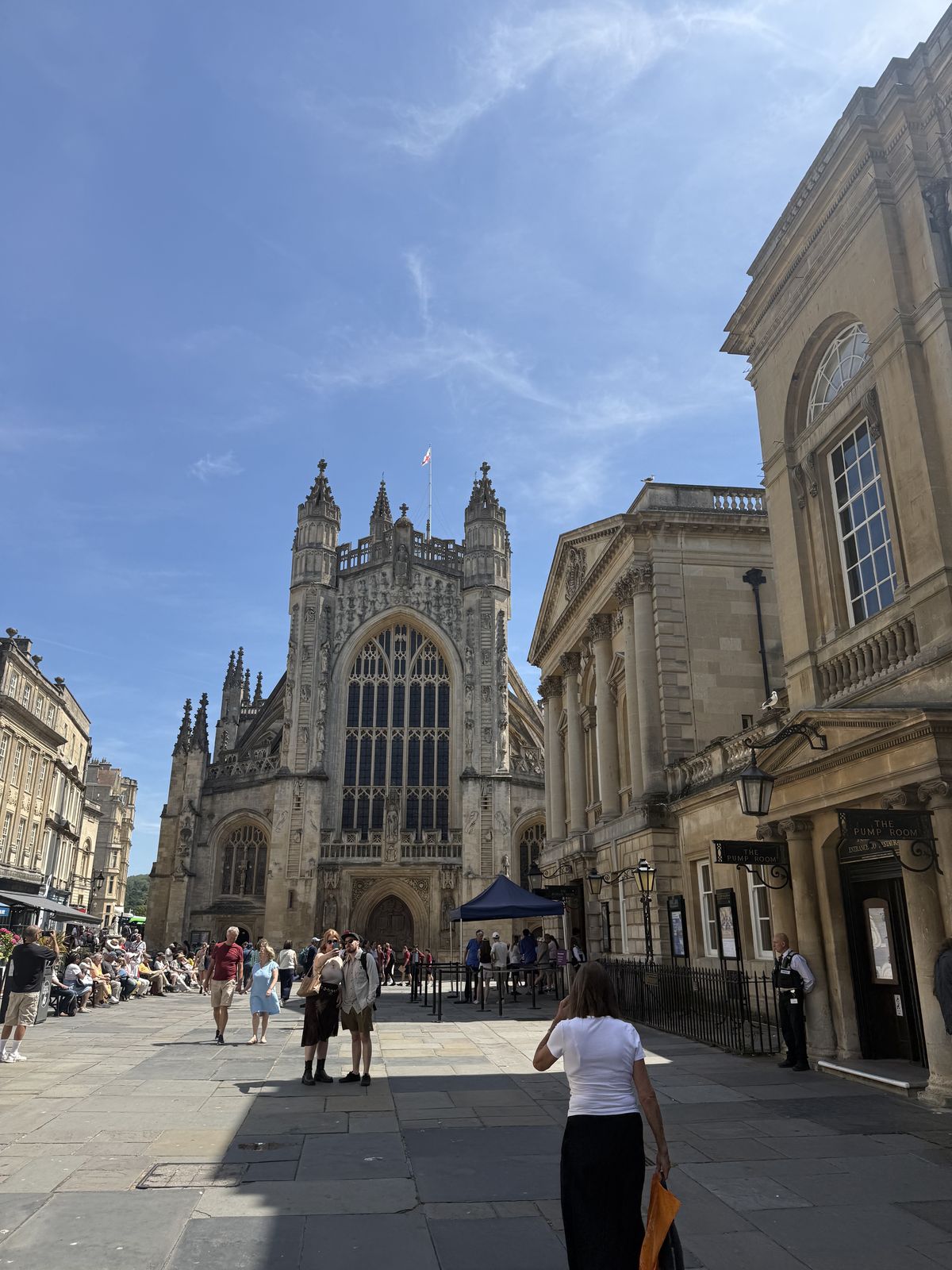
A single day covers all four headline sights on foot: the Roman Baths, where Britain's only hot spring still surfaces at around 45 to 46C, Bath Abbey next door, the Royal Crescent's sweep of 30 Georgian houses, and shop-lined Pulteney Bridge above the weir, with time left for a proper lunch or afternoon tea.
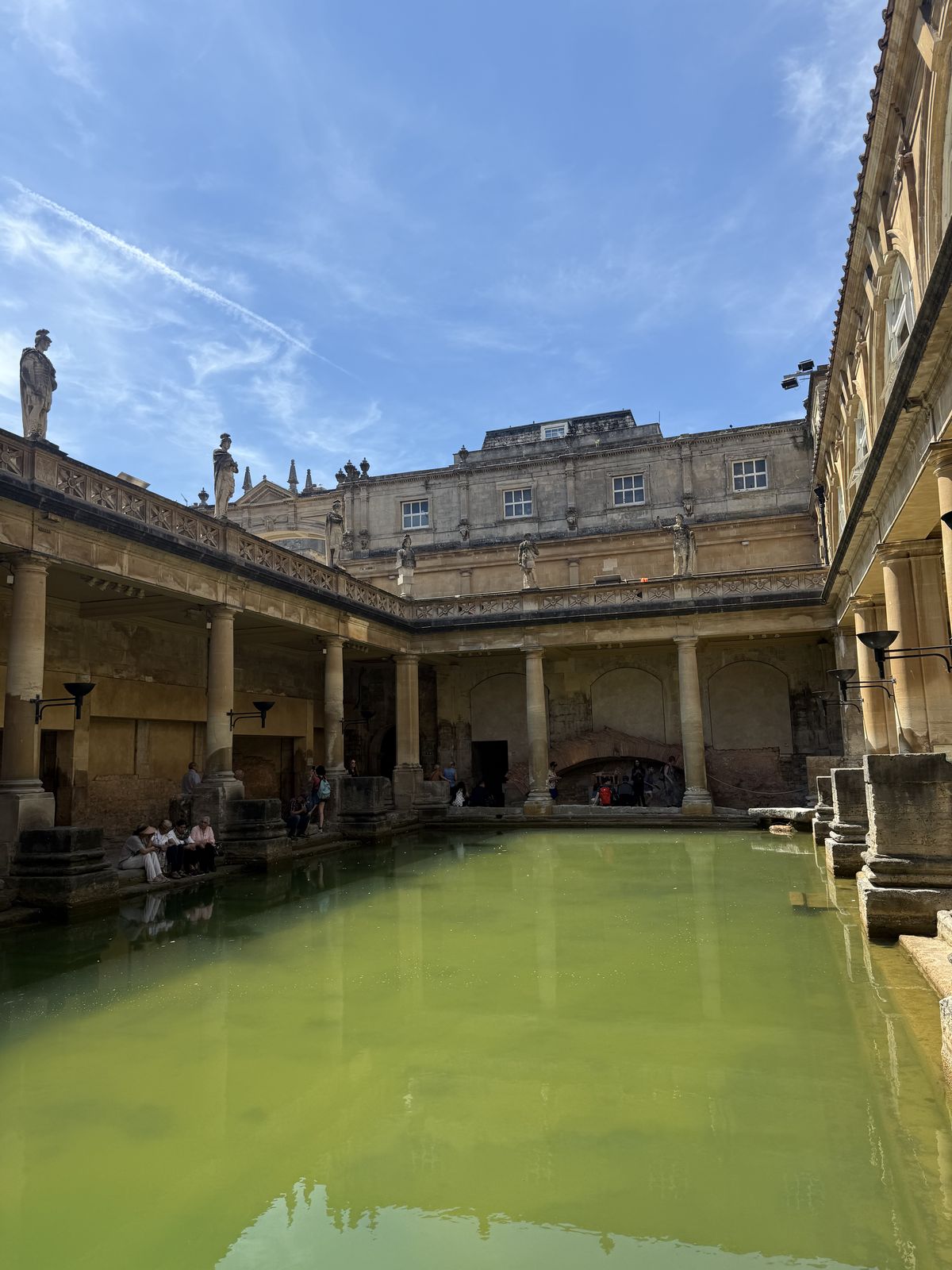
The reason Bath rewards a day trip is that its landmarks are packed into a walkable core. You can hit all of the marquee sights on foot without ever feeling rushed:
| Sight | Why it matters | Time to allow |
|---|---|---|
| Roman Baths | Britain's only naturally hot spring, a 2,000-year-old bathing complex | 1.5 to 2 hours |
| Bath Abbey | Fan-vaulted medieval church with the "Jacob's Ladder" west front | 30 to 45 minutes |
| Royal Crescent & The Circus | The great sweep of Georgian terraced architecture | 45 minutes to 1 hour |
| Pulteney Bridge & Weir | Shop-lined bridge above a curved horseshoe cascade | 20 to 30 minutes |
Add lunch or afternoon tea and you have a full, satisfying day without cramming. The whole centre is honey-coloured Bath stone, and because the entire city is a UNESCO World Heritage Site, even the streets between the sights are worth slowing down for. For a step-by-step walking order, see what to do in Bath in one day.
The Roman Baths deserve special mention. You walk terraces the Romans built around a spring where water still surfaces at around 46°C. You cannot bathe or touch the water, but the museum holds the gilded bronze head of Sulis Minerva and the carved Temple pediment with its glaring Gorgon's head. An audio guide is included, with one track voiced by Bill Bryson. Book a timed ticket ahead in summer and check the official Roman Baths website for the current price.
When is a day trip to Bath worth it?
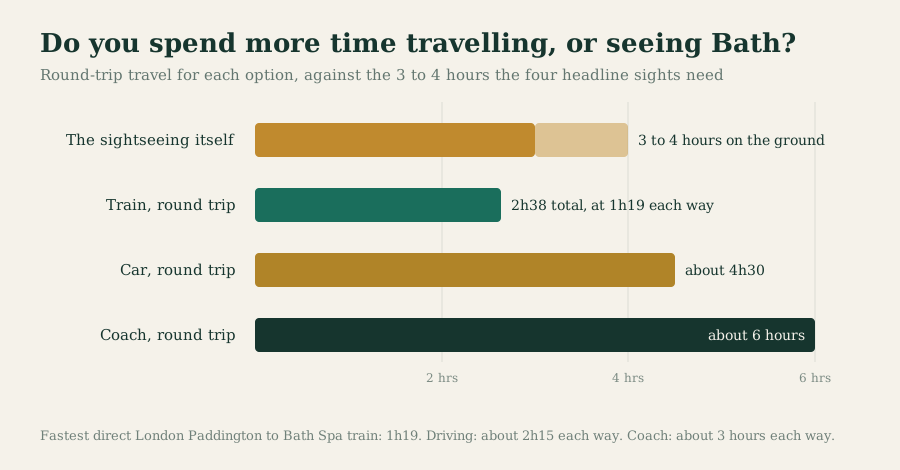
A day trip earns its place when you want world-class history without an overnight bag: Roman ruins and Georgian streets sit inside one walkable centre, the train costs you under three hours of travel in total, and a wet day still works because the biggest sights are indoors.
- You want history plus beauty in one hit. Roman ruins and Georgian architecture, side by side, both world-class.
- You are short on holiday days. One early train out of Paddington buys you a complete city.
- You like walking cities. Everything worth seeing is within a 15-minute stroll.
- The weather is grim. A wet day is easy to spend indoors between the Roman Baths, Bath Abbey and the museums.
| You are | Honest verdict |
|---|---|
| A first-time visitor after the headline sights | A day trip covers every one of them |
| Short on holiday days | One early train buys a complete city |
| Set on a long spa soak plus all the sights | Consider an overnight instead |
| Wary of steep streets | Doable, but plan a flatter route and skip the Crescent climb |
When is a Bath day trip not worth it?
Skip the day trip if you will have under four hours on the ground, if your heart is set on a long soak at Thermae Bath Spa as well as the sights, or if steep streets are a real difficulty, because Bath climbs and the Roman Baths alone can absorb two hours.
Honesty first. There are cases where a day trip underdelivers.
If your train gets you in after midday and you need to leave by mid-afternoon, you will feel the squeeze. Bath is compact, but the Roman Baths alone can eat two hours. Give yourself a proper day, ideally arriving by late morning at the latest.
If your main goal is to actually soak in the thermal water, know that this happens at Thermae Bath Spa, a modern day spa with a rooftop pool, not at the Roman Baths. Fitting a proper spa session and the historic sights into one day is tight. The is Thermae Bath Spa worth it guide covers whether to prioritise it.
And Bath is hilly. The walk up to the Royal Crescent and The Circus is a gentle climb, pleasant for most, but worth knowing if steep streets are hard for you.
Should you do Bath as a day trip or stay overnight?
One focused day covers the classic sights comfortably, so a day trip suits a first visit. Stay overnight only if you also want a Thermae spa session, Prior Park and its Palladian Bridge, or the lamplit streets after the day crowds leave, which a single day cannot squeeze in.
A day works for the headline sights. An overnight lets you add Prior Park, the Palladian Bridge, a spa session, a longer meal, and the city after the day-trippers have left, when the lamplit lanes feel like a film set. If you are weighing this up, how many days in Bath breaks down what each length of stay buys you.
For a first visit built around the classic sights, one focused day is plenty. That is the whole appeal.
How much does a day trip to Bath cost?
The spend swings on how you book. Advance off-peak train tickets cost far less than same-day fares, the coach from Victoria is the cheapest seat at around three hours each way, Bath Abbey charges for sightseeing entry, and walking the Georgian streets, the best free sight, costs nothing at all.
Bath is not a cheap day out if you pay for everything on the gate, but it does not have to be dear either. Advance off-peak train tickets are far cheaper than buying on the day. The coach (National Express, megabus or FlixBus from London, around three hours) is the budget route if time matters less than money. Bath Abbey charges for sightseeing inside, while the streets and its carved exterior remain free to explore. For the full picture, is Bath expensive walks through realistic daily spend.
| Cost lever | The cheap way | The dear way |
|---|---|---|
| Train ticket | Advance off-peak, booked early | Anytime fare bought on the day |
| The journey itself | Coach from Victoria, around 3 hours | Peak train at the barrier |
| The sights | Abbey exterior and Georgian streets free; Abbey interior ticketed | Paying on the gate everywhere |
What does a realistic Bath day trip look like, hour by hour?
A day trip works best on an early start: leave Paddington around 9am, reach Bath Spa before 10:30, and you have roughly six hours on the ground. That is enough for the Roman Baths, Bath Abbey, the walk up to the Royal Crescent, Pulteney Bridge and a proper lunch, with margin before the train home.
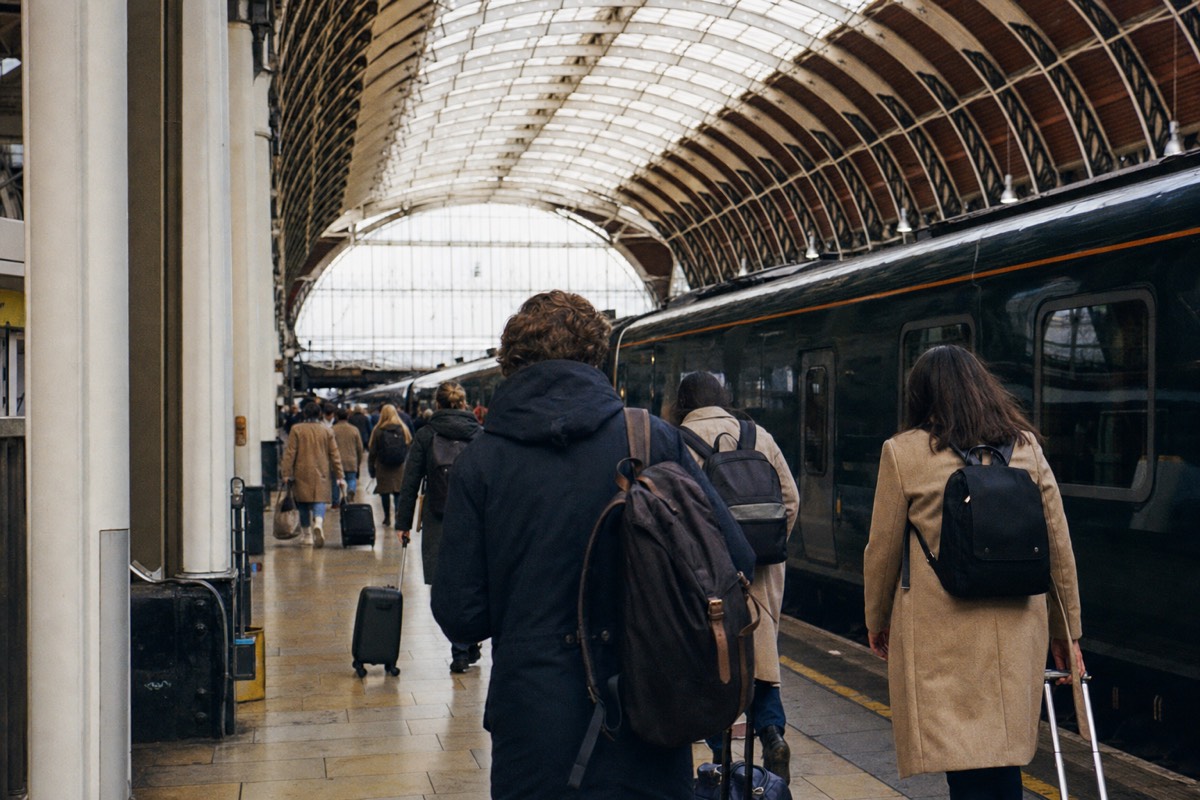
The single biggest factor in whether the day feels full or frantic is your arrival time. Aim to be walking out of Bath Spa station by mid-morning. Start at the Roman Baths, five minutes away, and you get in before the midday crush builds around the entrance. From there everything else falls into a natural loop on foot, so you rarely double back. Here is a shape that works for most first-timers:
| Time | Where you are | What you are doing |
|---|---|---|
| 09:00 | Paddington | Board a direct GWR service, about 1h20 to Bath Spa |
| 10:20 | Bath Spa station | Five-minute walk into the historic centre |
| 10:30 | Roman Baths | Timed entry booked ahead, allow 1.5 to 2 hours |
| 12:15 | Bath Abbey | Ticketed entry, right next door, 30 to 45 minutes |
| 13:00 | Lunch | Sally Lunn's, the Pump Room or a pavement cafe |
| 14:15 | Royal Crescent and The Circus | Gentle uphill walk, 45 minutes to an hour |
| 15:30 | Pulteney Bridge and weir | Best view from Parade Gardens on the south bank |
| 16:15 | Free time or tea | Riverside, independent shops, afternoon tea |
| 17:30 | Bath Spa station | Direct train back to Paddington |
Treat those times as a planning allowance rather than a fixed timetable. If you prefer a slower pace, drop Pulteney Bridge to a quick look and linger longer inside the Roman Baths, which reward it. The point of the schedule is only to show that a full day genuinely fits, with lunch, without running.
Train, coach or guided tour: which day trip suits you?
The train is fastest, the coach is cheapest, and a guided tour trades flexibility for zero planning. Most first-timers take the direct train from Paddington. The coach suits tight budgets with time to spare, driving suits door-to-door trips with stops, and a guided tour suits groups or anyone who would rather not watch the clock all day.
Each route into Bath has a clear personality, so the right one depends on what you are optimising for. Speed points to the train, price points to the coach, and freedom from any planning at all points to a guided tour. This ladder lays the trade-offs side by side:
| Option | Typical time each way | Best for | Trade-off |
|---|---|---|---|
| Direct train (GWR) | About 1h20 | Speed and frequent departures | Book advance off-peak for the best fare |
| Coach (National Express, megabus, FlixBus) | Around 3 hours | The lowest fare | Slower and more exposed to traffic |
| Driving via the M4 | About 2h15 | Door-to-door with stops | Central parking is limited and pricey |
| Guided day tour | Runs the route for you | No planning, commentary, groups | A set itinerary and fixed departure |
One detail catches drivers out. Bath runs a Clean Air Zone in the centre, though private cars and motorbikes pay nothing under it, so the real issue is parking rather than a charge. Central spaces are scarce and expensive, and the easy answer is a Park and Ride on the edge of the city. For a first day trip with no car to think about, the direct train off National Rail remains the cleanest choice, and the coach is the one to beat only on price.
What does James tell first-time day-trippers to skip?
James, who has guided London-to-Bath day trips since 2022, says the day works best when you resist doing everything. After more than a thousand travellers, his pattern is clear: on a single day, skip a full Thermae spa session, skip the out-of-centre gardens at Prior Park, and skip driving into the middle, then spend the saved hours slowly inside the Roman Baths instead.
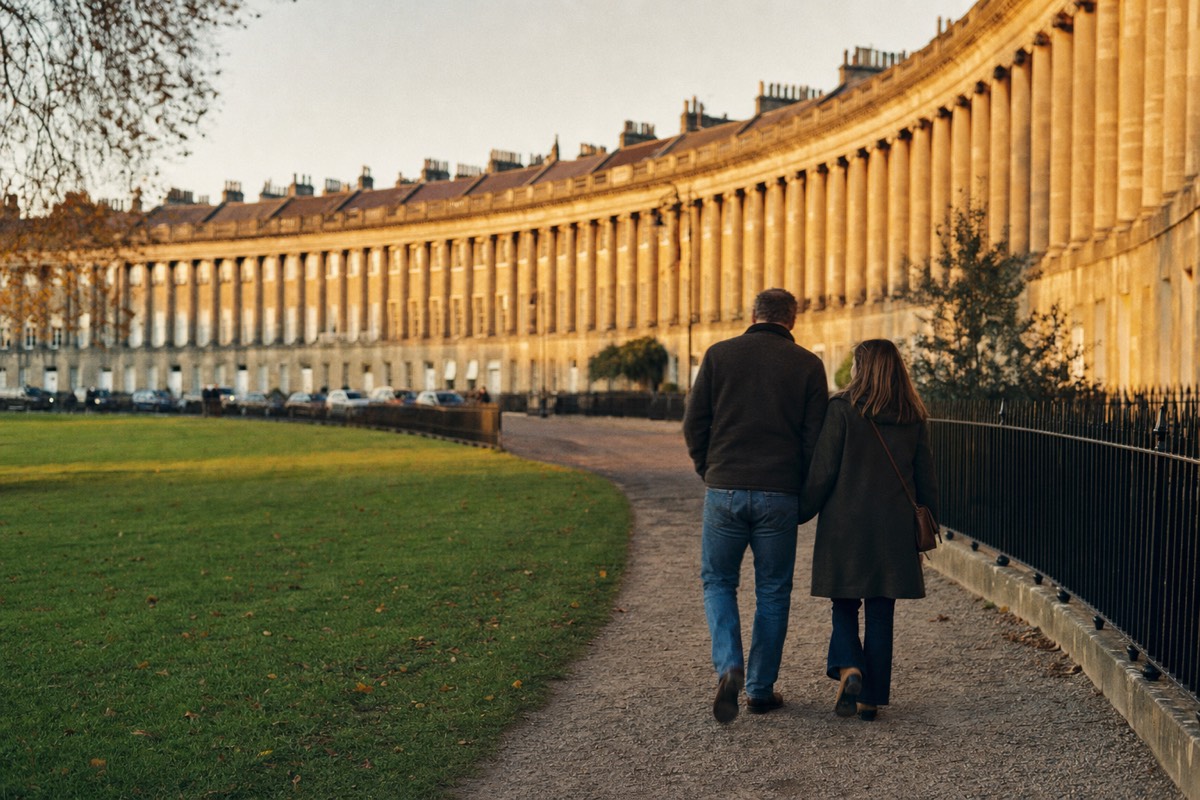
"The mistake I see most is people trying to fit a spa soak into a day trip," James says. A proper session at Thermae Bath Spa can absorb two hours or more, and on a single day that time comes straight out of the historic sights. His advice is to save the spa for a return visit with an overnight, when it stops competing with the Roman Baths for the same afternoon.
Prior Park is the second thing he steers first-timers away from on a tight day. It is a fine landscape garden with a rare Palladian Bridge, but it sits outside the walkable core, has no visitor parking, and needs a bus or a decent walk to reach. "It is a wonderful second-visit sight," he says, "not a first-day one." The same logic applies to driving in: with the centre so compact and the train so frequent, a car mostly buys you a parking headache.
Where James tells people to spend the reclaimed time is the Roman Baths themselves. His specialism is Bath's Roman and Georgian heritage, and he reckons most day-trippers give the Baths ninety rushed minutes when the terraces, the Sacred Spring and the Sulis Minerva head reward closer to two unhurried hours. Slow down there, he says, and the day feels richer than any checklist of five sights ever will. It is his opinion after years of guiding, not a rule, but it is the one he repeats most.
Which month is best for a Bath day trip?
May and September hit the sweet spot: decent weather, lighter crowds and long enough daylight for the walk up to the Crescent. July and August are the warmest but busiest around the Baths at midday, and December trades short days for the wooden chalets of the Christmas market around the Abbey.

Bath works all year, and because its biggest sights are indoors, even a wet winter day holds up. What changes month to month is the balance of weather, crowds and daylight, which matters more on a day trip than on a longer stay because you only get one shot at it. This scorecard sets out the trade-offs:
| Month window | Crowds | Daylight | What stands out |
|---|---|---|---|
| March to April | Building | Lengthening | Quieter sights, changeable weather |
| May | Moderate | Long | Sweet spot for weather and space |
| June to August | Heaviest | Longest | Warmest, book the Baths for opening |
| September | Moderate | Long | Second sweet spot, Jane Austen Festival |
| October to November | Easing | Shortening | Autumn light, fewer visitors |
| Late Nov to mid-Dec | Busy again | Short | Christmas market chalets by the Abbey |
If you can pick your date, aim for a weekday in May or September. If you are tied to summer, the workaround is timing rather than the month: book the earliest Roman Baths slot, get it done before the crowds thicken, and use the cooler afternoon for the Georgian streets. December is its own thing entirely, with the market drawing its own crowds around the Abbey; Visit Bath is the place to confirm the market's exact dates for the year you are going.
What should you pack for a day on foot in Bath?
Pack for walking on stone: comfortable shoes for cobbles and one steady climb, a light layer and a small umbrella for changeable Somerset weather, your Roman Baths ticket saved on your phone, and not much else. Bath is compact enough that you carry your whole day easily between the sights.
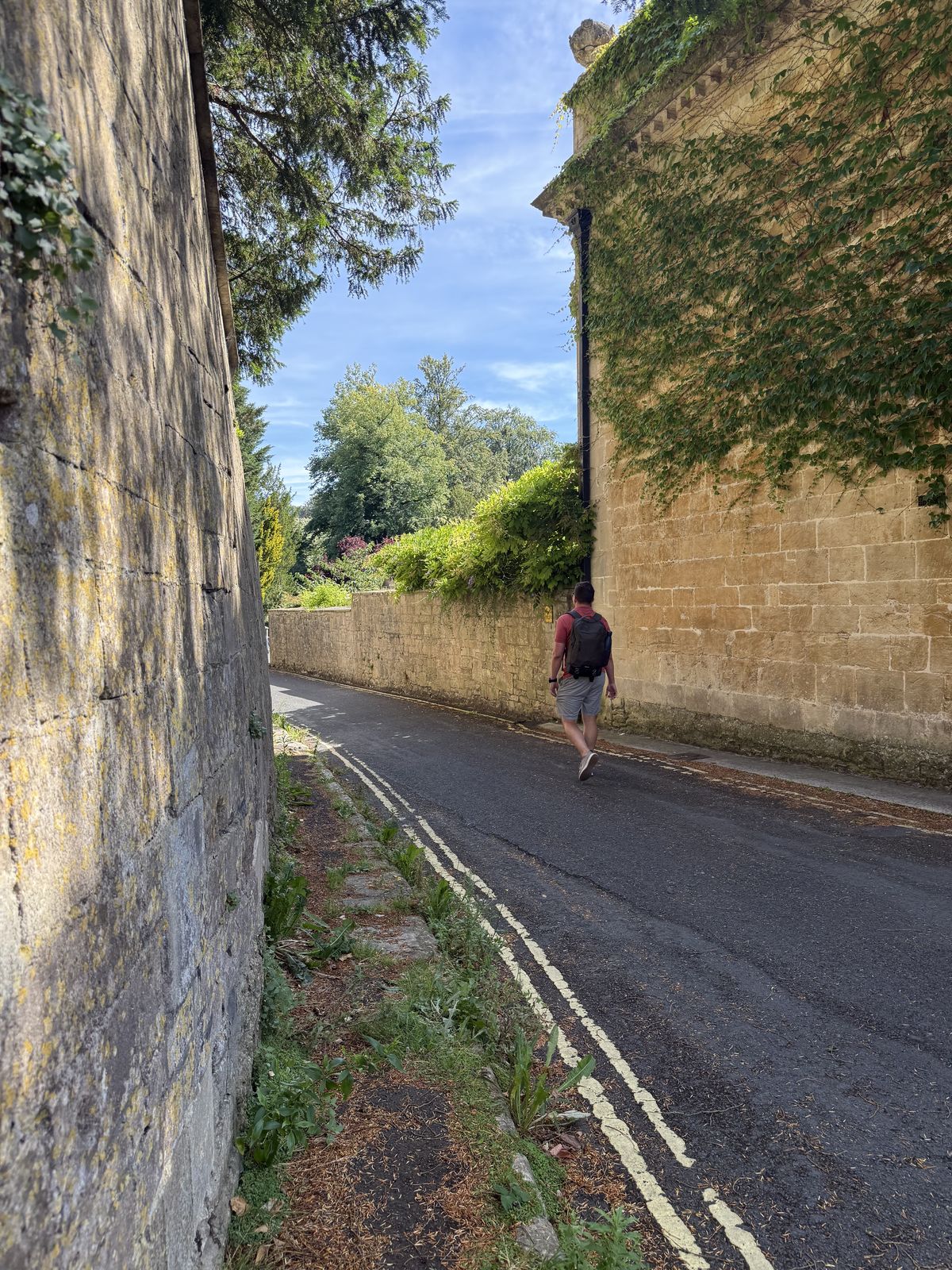
Because the whole centre is walkable and you are back in London the same night, a day trip needs remarkably little kit. The one thing that genuinely affects your comfort is footwear: Bath's lanes are cobbled in places, and the pull up to the Royal Crescent and The Circus is a gentle but real climb. Everything else is about being ready for the weather and skipping the queue faff.
| Bring | Why it earns its place |
|---|---|
| Comfortable walking shoes | Cobbled lanes and the uphill stretch to the Royal Crescent |
| A light waterproof layer | Somerset weather turns quickly; a wet day suits the indoor sights anyway |
| Your Roman Baths ticket on your phone | Entry is timed, so booking ahead in summer saves the queue |
| A refillable water bottle | You are on foot all day with little need for transport |
| A small daypack, not a suitcase | Same-day return means you travel light |
Leave the big bag at home or in a London locker. There is no need to haul luggage around Bath for a day trip, and the lighter you travel, the easier the walk between the Baths, the Abbey and the Crescent feels.
Frequently asked questions
Is one day enough to see Bath?
Yes for the main sights. The Roman Baths, Bath Abbey, the Royal Crescent, The Circus and Pulteney Bridge all sit within a compact walkable centre, and a well-timed day covers them comfortably. You will need a second day if you also want a spa session, Prior Park, or a slower pace.What is the fastest way to get from London to Bath?
The direct Great Western Railway train from London Paddington to Bath Spa, fastest around 1 hour 20 minutes, roughly every half hour. Bath Spa station is about a five-minute walk from the Roman Baths.Can you swim in the Roman Baths?
No. You cannot bathe in or touch the water at the Roman Baths; it is a historic site and museum. To actually soak in Bath's thermal water, visit Thermae Bath Spa, a separate modern spa with a famous open-air rooftop pool.Is a guided tour better than doing it independently?
It depends on you. Independent travel by train gives you flexibility and can be cheaper with advance tickets. A guided day tour removes all the timing and route planning and often bundles the drive with commentary, which suits groups and anyone who would rather not organise the logistics.Which is better to see, the Roman Baths or Thermae Bath Spa?
They are different experiences. The Roman Baths are the historic ruins and museum you look at but cannot enter. Thermae Bath Spa is where you actually bathe in the thermal water. Most first-time day-trippers prioritise the Roman Baths for the history and the sight itself.Plan your next step
Stonehenge & Bath from London
Have a travel date in mind? See Stonehenge and Bath with the coach journey and guide arranged together. Check your date before arranging the rest of your day.
About 11 hours; Victoria Coach Station departure, Gloucester Road return. Choose the admission option you want; meals and hotel pickup are not included.
Start with this option, or compare the choices below.
Choose a date to see the published schedule.
Compare the options for your Bath plans
| Experience | Why choose it | Allow | What to account for |
|---|---|---|---|
| Stonehenge & Bath from London | See Stonehenge and Bath with the coach journey and guide arranged together. | 11 hours | About 11 hours; Victoria Coach Station departure, Gloucester Road return. Choose the admission option you want; meals and hotel pickup are not included. |
| City walk & Roman Baths entry | Pair a Blue Badge guided city walk with a self-guided visit inside the Roman Baths. | 3 hours | About 3 hours; meet outside Bath Abbey’s main doors. Roman Baths entry and audio guide included; your guide does not lead the visit inside. |
| Roman Baths entry & audio guide | Explore the Great Bath, temple remains and museum at your own pace. | 2 hours | Timed admission in Bath with an audio guide. Allow 1½–2 hours as a planning estimate; no bathing or London transport. |