Is Thermae Bath Spa Worth It?
This is the place in Bath where you actually get in the hot spring water.
 Written with James Thornton, London to Bath day tour guide & heritage specialist
Short answer
Yes, Thermae Bath Spa is worth it if you want to bathe in Bath's natural thermal water, especially for the open-air rooftop pool looking over the city. It is a modern day spa fed by the same hot springs as the Roman Baths, but it is a separate building where you swim and relax rather than tour history. It suits couples, a rainy day, or a relaxing end to sightseeing. Book ahead, and check the official site for current prices.
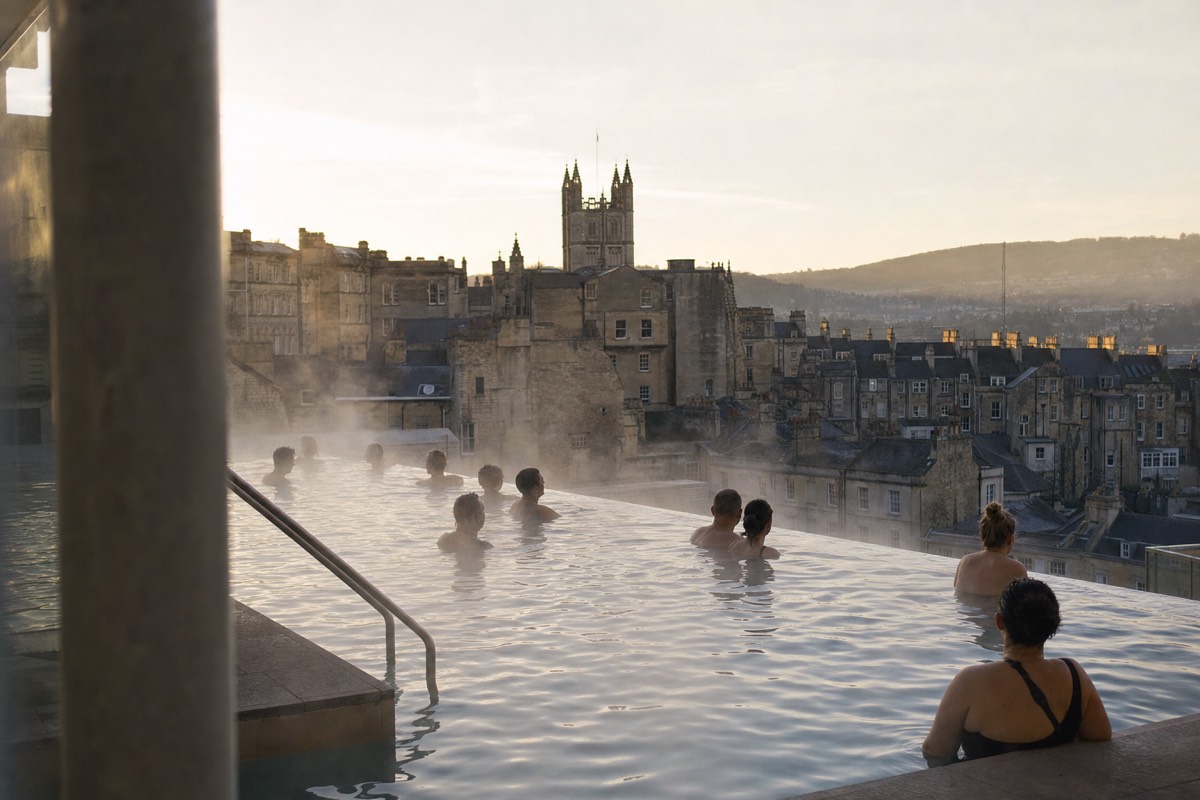
Picture yourself neck-deep in warm mineral water on an open rooftop, steam curling off the surface, with the Abbey tower and honey-stone rooftops of Bath spread out below you. That image, the one on every postcard of the spa, is the reason most people book Thermae Bath Spa. And yes, it delivers.
Here is the thing visitors often get muddled about. You cannot bathe at the Roman Baths. That site is for looking, not swimming. Thermae Bath Spa is the answer to "but I want to actually get in the hot water," and it does exactly that, using the same natural springs that fed the Roman complex two thousand years ago.
What do you get at Thermae Bath Spa?
Thermae Bath Spa is a modern day spa fed by Bath's natural hot springs. A standard session buys the open-air rooftop pool with its view over the city, the big indoor Minerva Bath, and a wellness suite of steam rooms, an infrared room and an ice chamber. Treatments and packages cost extra.
The building sits near the old baths, and it works like a proper day spa rather than a museum. The main draws:
| The rooftop pool | The open-air thermal pool on the roof, warm water and a view over the city. This is the headline experience, best at dusk or on a crisp day when the steam rises. |
|---|---|
| The Minerva Bath | The largest indoor thermal pool, with gentle currents and a lazy, relaxed feel. |
| The wellness suite | Steam rooms, an infrared room, and an ice chamber over a couple of floors, included with a standard session. |
The water is the same naturally hot spring water that made Bath famous, filtered and treated so it is safe to bathe in, which the Roman water is not. Sessions are usually sold as a time block, and you can add treatments and packages. Because prices and packages change and vary by day and season, I will not print a figure. Check the official Thermae Bath Spa site for current prices and what each session includes.
What is actually in the water?
The same spring water that fed the Roman complex, treated so you can bathe safely. It is heated underground to around 69C, surfaces at about 45C, and is cooled to a comfortable 33.5 to 34C in the pools. It carries more than 42 minerals and trace elements, and over a million litres rise daily.
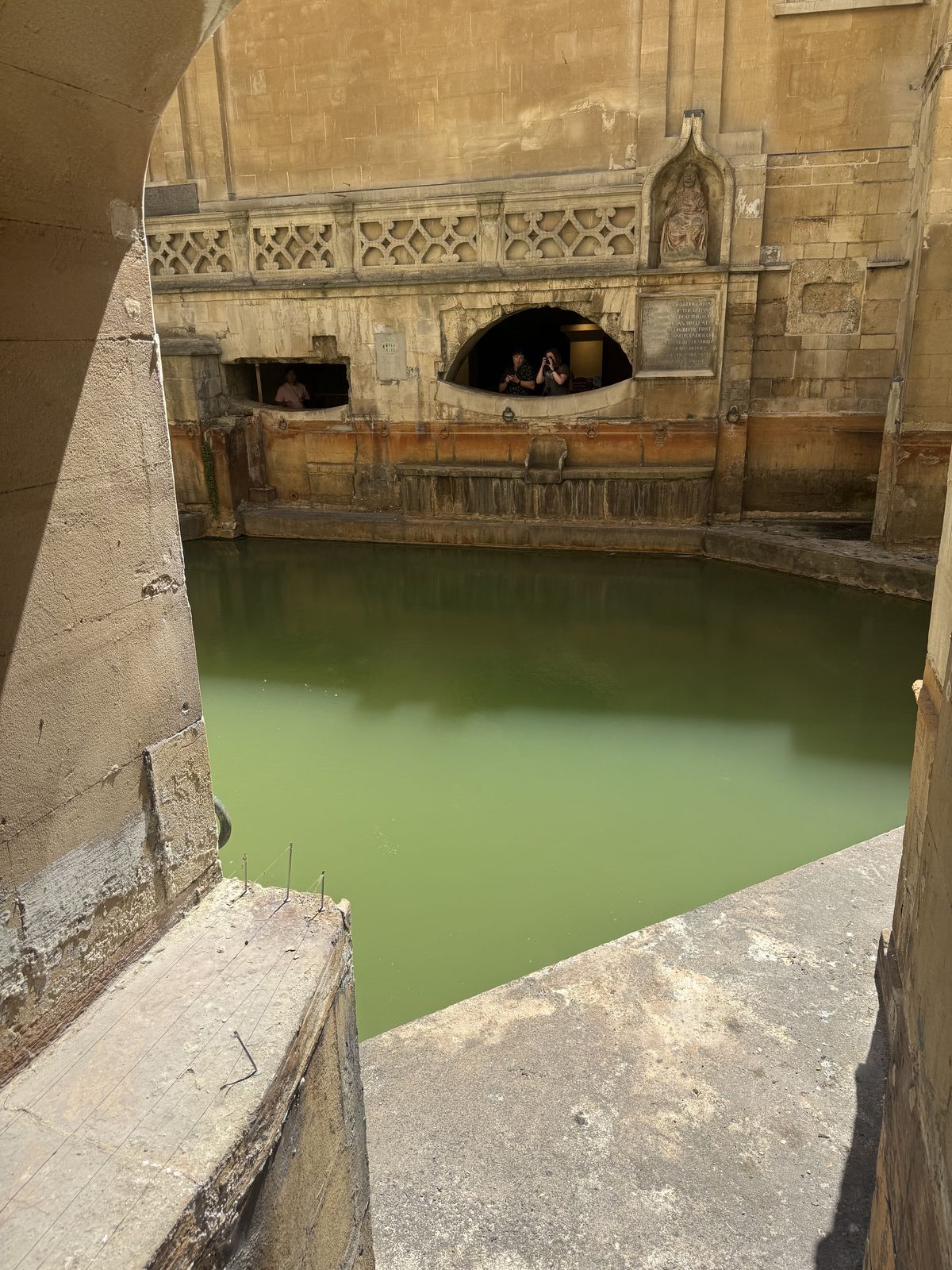
| The water, by the numbers | |
|---|---|
| Heated deep underground | Around 69C |
| Surfacing at the springs | About 45C |
| In the bathing pools | 33.5 to 34C |
| Pool depth | About 1.35 metres |
| Mineral content | More than 42 minerals and trace elements |
| Daily flow | Over a million litres |
That 1.35 metre depth is deliberate: these are pools for standing, floating and wallowing, not swimming lengths. The temperature matters more than it sounds, too. Water in the 33.5 to 34C band is warm enough to relax into for a whole session without overheating, which is the entire point of cooling it down from the heat it arrives with.
How is Thermae Bath Spa different from the Roman Baths?
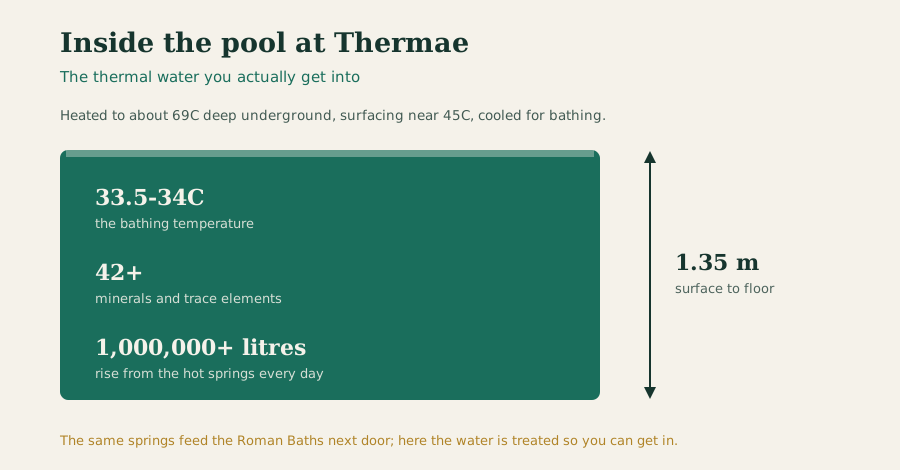
The Roman Baths is a monument you tour; Thermae Bath Spa is a pool you get into. At the Roman site you follow a route past genuine remains with an audio guide and never touch the water. At Thermae you change into swimwear and soak in treated thermal pools. Different buildings, different tickets.
People sometimes book one thinking they will get the other, so this is worth being clear about.
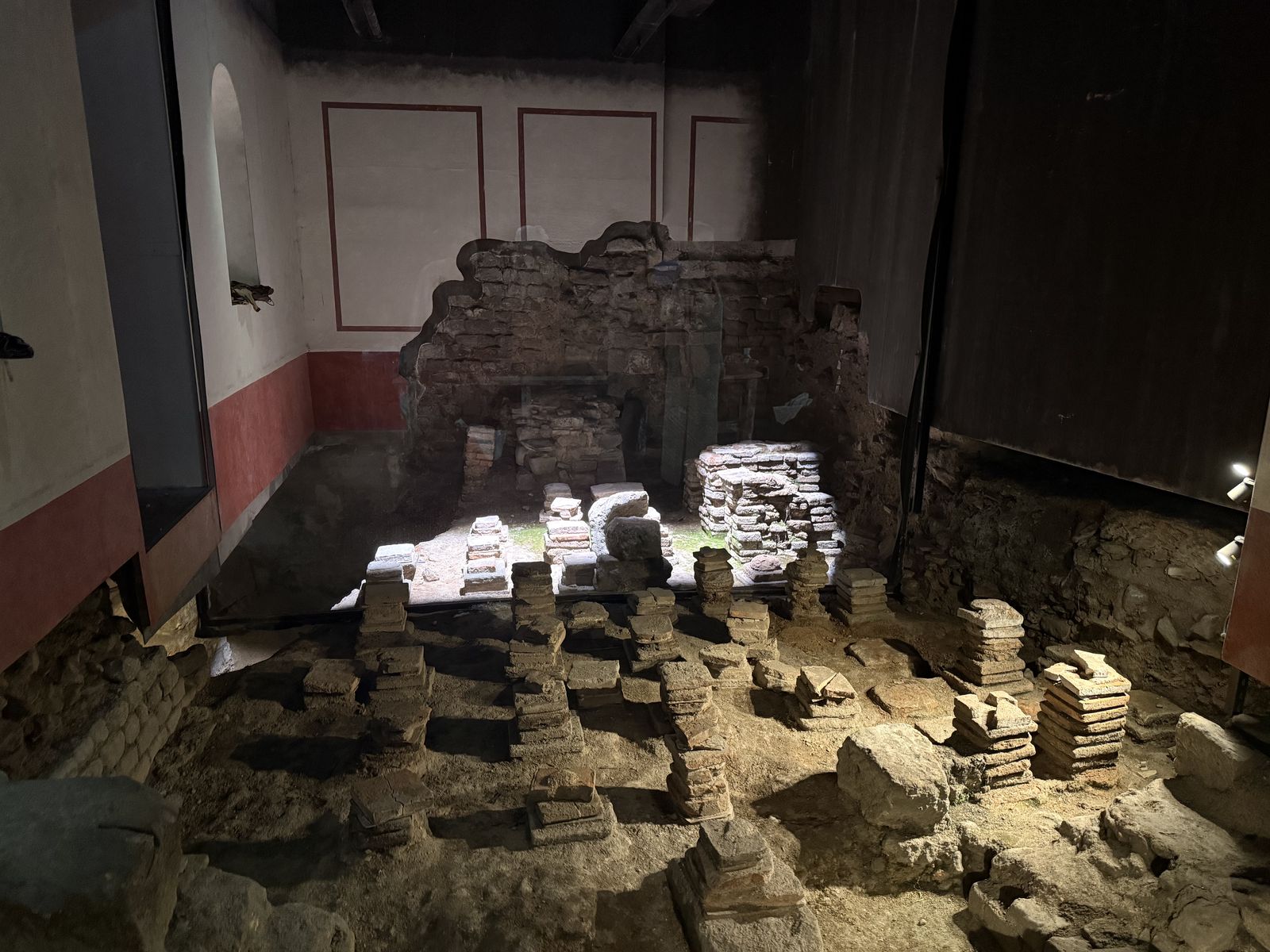
The Roman Baths is a historic monument and museum. You walk a route, use an audio guide, and look at genuine Roman remains and finds, including the Gorgon pediment and the head of Sulis Minerva. You do not get in the water there: the untreated spring, which rises at around 45 to 46C, is roped for viewing, and tickets and times sit on the official Roman Baths site. Allow 1.5 to 2 hours.
Thermae Bath Spa is a leisure and wellness experience. You change into swimwear, get in the thermal pools, and relax. There is no history tour, no audio guide, no ancient stonework. It is about how the water feels, not what it meant to the Romans.
Many day-trippers do both: the Roman Baths in the morning for the history, the spa in the afternoon to soak. If you only have time or budget for one, choose by mood. Curious about the past, do the Baths. Want to unwind, do the spa.
| Roman Baths | Thermae Bath Spa | |
|---|---|---|
| What it is | Ancient monument and museum | Modern day spa |
| Do you get in? | No, viewing only | Yes, that is the point |
| The water | Untreated, rising at about 45 to 46C | Treated, held at 33.5 to 34C |
| Time to allow | 1.5 to 2 hours | A booked session |
| The takeaway | What the water meant | How the water feels |
Who is Thermae Bath Spa for?
It suits couples, anyone marking an occasion, and visitors caught in Bath on a wet day, since rain only improves a rooftop thermal pool. It suits you less on a tight one-day sightseeing schedule, because a session eats hours, and it offers no history at all, just the water itself.
It works for a group after something more relaxing than another museum, and it makes a lovely, slow end to a day of walking the Georgian streets. Rain does not touch the experience; if anything it improves it.
It suits you less if you want to see as much of Bath as possible in a single day, because a spa session takes a real chunk of it. It is also a bathing venue, so if you were hoping for more history, you will not find it here. Weigh it against the rest of what Bath offers before you commit the hours.
One practical note for day-trippers from London: a spa session works best when you are not clock-watching over train times. If the logistics feel tight, a guided day tour from London handles the travel and route so your Bath time is genuinely yours, whether you spend it soaking or sightseeing.
Do you need to book Thermae Bath Spa in advance?
Yes. Popular sessions fill up, especially weekend evenings and the rooftop around sunset, and turning up on spec is a gamble. Book on the official Thermae Bath Spa site, where current session prices, opening times and minimum age rules live. Bring or hire a towel and robe, and pack swimwear.
Bring or hire a towel and a robe, and remember it is swimwear, not a bathing costume optional situation. There are usually minimum age rules, so check before bringing children.
For the current session prices, opening times, treatment packages, and any age limits, go to the official Thermae Bath Spa website. Those details shift, and the official page is the only place I would trust for the live figures.
How much should you budget for a Thermae Bath Spa visit?
Budget for more than the base session. A standard ticket buys the pools and the wellness suite, but towel, robe and slippers cost extra unless you bring your own, and treatments, spa packages and food in the café are all add-ons. Set a session figure from the official site, then add a small allowance for hire and anything you fancy.
Because I will not print prices that change by day and season, think in categories rather than numbers. The core spend is the session itself, sold as a time block. Around it sit a handful of optional costs that catch people out only because they had not planned for them.
| What it covers | Included in a standard session? |
|---|---|
| Rooftop pool, Minerva Bath and wellness suite | Yes |
| Towel, robe and slippers | Usually hire or bring your own |
| Spa treatments and massages | Extra, booked separately |
| Twilight or package sessions | Priced differently to a standard session |
| Food and drink in the café or restaurant | Extra |
The practical move is to decide in advance whether you are doing a plain soak or a fuller pampering visit, because the two sit at very different price points. Bring your own towel and robe if you would rather not pay to hire them. For the live session figures and every package, the official Thermae Bath Spa site is the only place worth trusting, since the numbers shift through the year.
When is the best time to visit Thermae Bath Spa?
Dusk on the rooftop is the standout, when the steam catches the fading light over the city, and it is also the busiest slot, so book it early. A wet or cold day actually improves the experience rather than spoiling it. Quietest tends to be a weekday daytime session outside the school holidays.
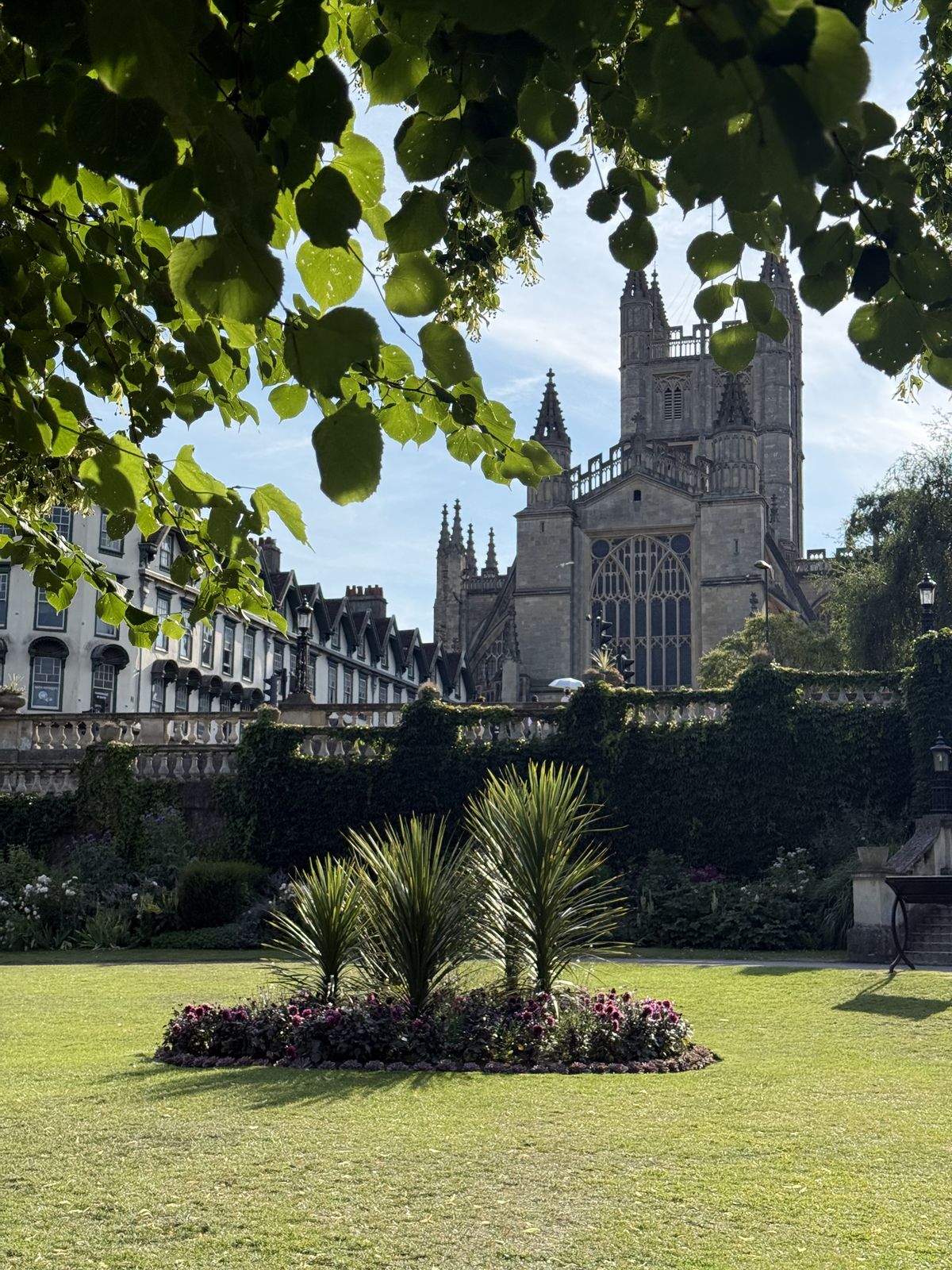
The rooftop pool is the whole reason most people come, and it is at its best when the light is low and the steam rises off the surface. That makes weekend evenings and sunset slots the first to fill. If a rooftop-at-dusk soak is your goal, treat it as the thing you book before anything else on your Bath day.
Weather works differently here than at an outdoor sight. Rain on the rooftop is part of the charm, and a cold snap only makes the warm water more welcome, so do not write off a grey forecast.
| When | Feel | Worth knowing |
|---|---|---|
| Weekday daytime | Quietest | Best odds of an unhurried rooftop; good outside school holidays |
| Weekend daytime | Busier | Book ahead, especially in summer |
| Any evening at dusk | Atmospheric and busy | The signature session; reserve early |
| Wet or cold day | Surprisingly good | The pools shine when the weather does not |
| July to August | Busiest overall | Popular slots go first; plan further ahead |
Because it is an indoor and rooftop venue, Thermae is the reliable move when Bath's weather turns and the outdoor sights lose their shine. The city's wider visitor information is handy for pairing a spa session with whatever else the day allows.
What should you bring and know before your first session?
Bring swimwear, and either bring or plan to hire a towel and robe. Sessions run as a timed block, so arrive a little early to change. There are usually minimum age rules, lockers for your things, and no need for anything fancy: this is a soak, not a swim, so leave the goggles at home.

The pools sit at around 33.5 to 34C and about 1.35 metres deep, which is standing and floating depth, not lap-swimming depth. That shapes what you actually need. You are there to relax in warm mineral water, so the kit list is short and the dress code is simply swimwear.
| Bring or plan for | Why |
|---|---|
| Swimwear | Required; there is no way around it |
| Towel and robe | Bring your own or hire on site |
| A little early arrival | Sessions are timed; you need time to change first |
| Check the age rules | There are usually minimum age requirements |
| Not much else | Standing-depth pools; no goggles or swim kit needed |
One comfort note for day-trippers: a session is far better when you are not watching the clock over a train home. The pools reward a slow, unhurried hour, so give yourself the room to take one. If the timing feels tight around your travel, that is worth solving before you book the slot rather than after.
What is the rooftop pool actually like?
The rooftop pool is an open-air thermal pool on top of the building, warm water at a comfortable 33.5 to 34C, with an uninterrupted view across Bath's honey-stone rooftops and the Abbey tower. It is the image on every postcard of the spa, and at dusk, with steam lifting off the surface, it earns the reputation.
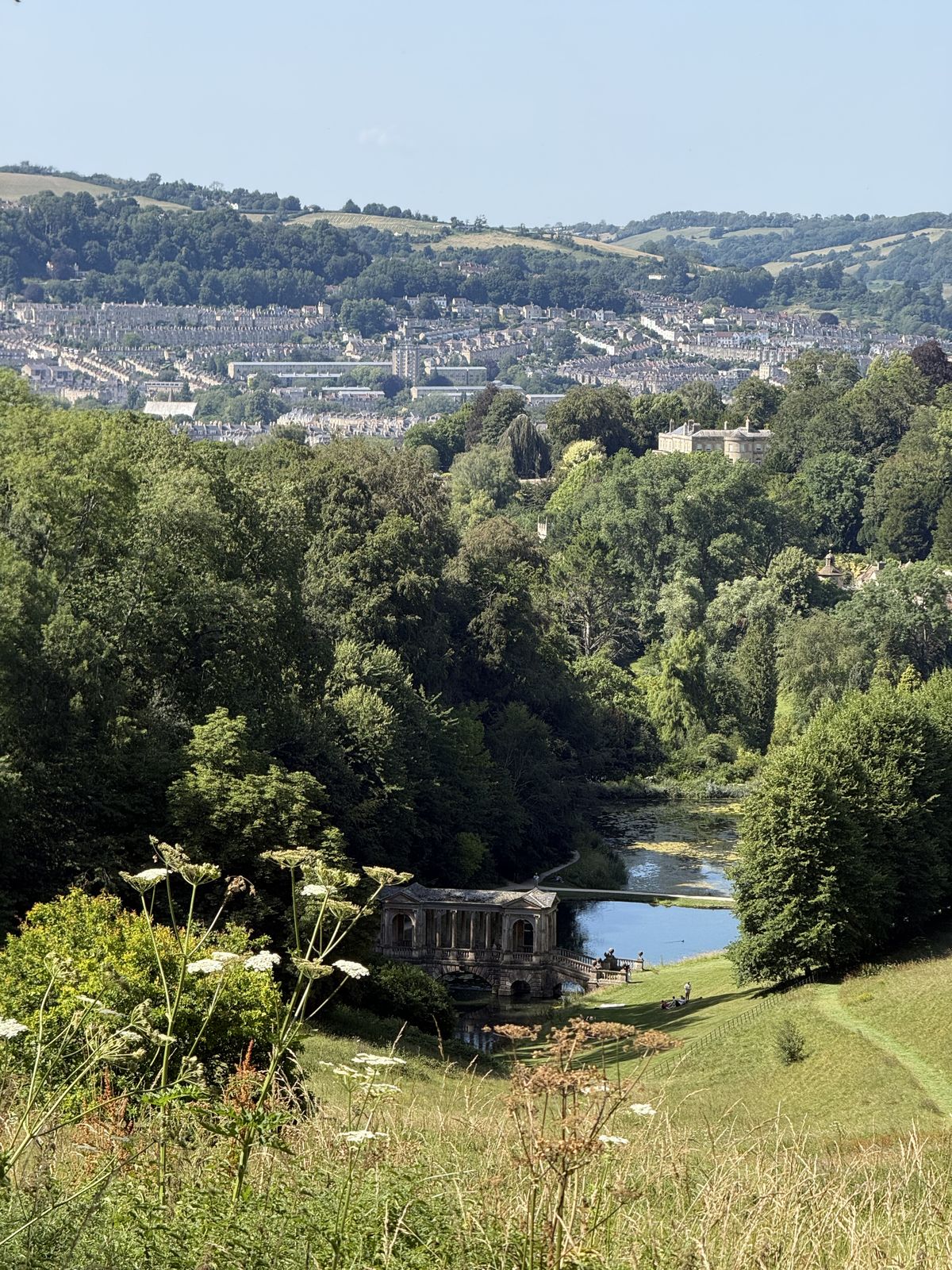
What makes the rooftop work is the contrast. You stand chest-deep in mineral water heated by the same springs the Romans used, while the open air keeps you cool from the shoulders up. On a cold or drizzly day that contrast sharpens rather than fades, which is why regulars rate a grey afternoon over a hot one. The water sits at standing depth, about 1.35 metres, so you float and wallow rather than swim, and the pace is deliberately slow.
The view does a lot of the work. From up there the city reads as one continuous sweep of Georgian terraces, with the Abbey tower rising over it. Time your session for the last light and the rooftop shifts from pleasant to memorable, which is exactly why the sunset slots book out first. It is worth saying plainly that the indoor Minerva Bath and the wellness suite are part of a standard session too, so the rooftop is the headline rather than the whole show. Most people drift between all three over a couple of unhurried hours.
What does James tell first-timers about Thermae Bath Spa?
James, who has run London-to-Bath day trips since 2022 for well over a thousand travellers, says the spa is a genuine treat but a poor fit for a packed sightseeing day. His advice is blunt: decide early whether this is a soaking day or a walking day, because a full session quietly eats a large chunk of your hours in Bath.
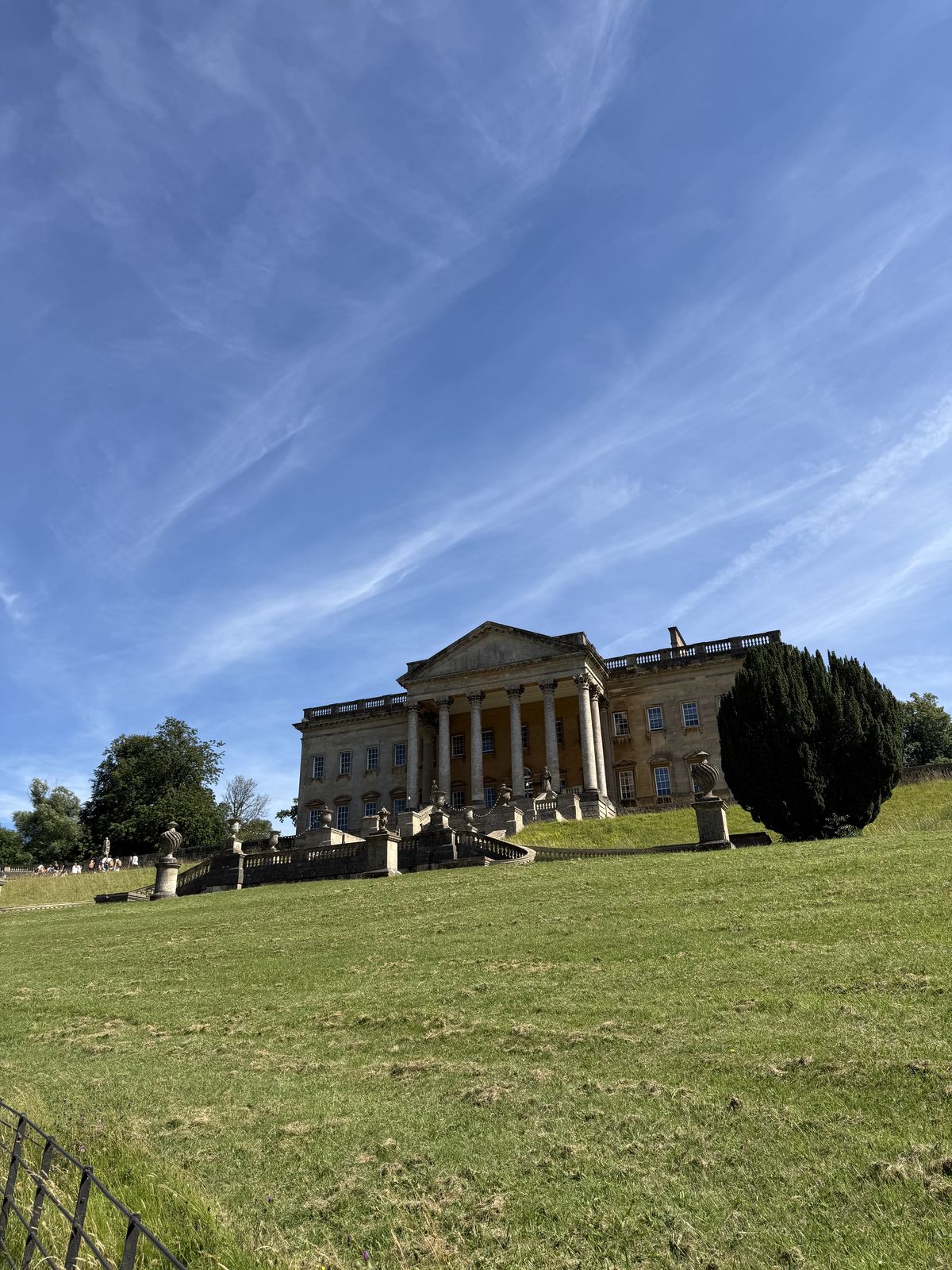
James's travellers split neatly into two camps. "The people who love Thermae are the ones who came to slow down," he says. "Couples, anyone marking an occasion, or a group that has had enough of museums. For them it is the best two hours of the trip." The ones who leave disappointed, in his experience, are usually the visitors who tried to bolt it onto an already full day of sights and then felt rushed in the water, which defeats the purpose.
His other steady piece of advice is about booking the right slot. "If you want that rooftop-at-sunset photo everyone has seen, that slot is the first to go, so book it well ahead," he says. He also reminds first-timers that this is a bathing venue and nothing else: no history, no audio guide, no ancient stone, just the water. Travellers who want the Roman story as well should pair it with the Roman Baths earlier in the day rather than expecting to find it here. Handled that way, with the soak saved for the end, James says it is one of the most memorable ways to close a Bath visit. Rushed or misjudged, it is the thing people wish they had planned better.